Solar Energy and Power

All Things Solar And Science

Subsurface Mapping for Optimized Solar Farm Placement

30 seconds summary

  • Subsurface mapping plays a crucial role in optimizing solar farm placement by providing detailed insights into the land’s underground conditions. By using seismic data processing and imaging services, developers can assess soil composition, groundwater levels, rock layers, and ground stability.
  • This helps in selecting the most suitable sites, reducing construction costs, mitigating environmental impact, and ensuring the long-term durability of solar installations.
  • Advanced seismic techniques, including 3D imaging and multi-modal data integration, enhance accuracy and efficiency, contributing to more sustainable and cost-effective solar energy projects.
Surface survey with a ground-penetrating radar cart, used to assess soil layers and underground conditions at proposed solar farm sites.

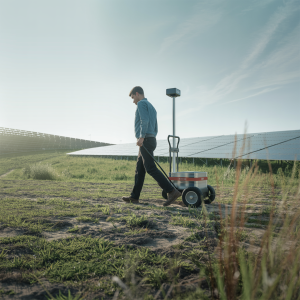
Surface survey with a ground-penetrating radar cart, used to assess soil layers and underground conditions at proposed solar farm sites.

The increasing demand for renewable energy sources has prompted the growth of solar power systems worldwide. Among the various factors influencing the success of solar farms, one often-overlooked component is the subsurface conditions of the land where the solar panels are to be placed. The interaction between solar farms and the ground beneath them can significantly impact their long-term performance, construction costs, and environmental sustainability. This is where subsurface mapping becomes critical. By using advanced techniques, particularly seismic data processing and imaging services, developers can optimize solar farm placements, ensuring maximum energy production, minimal environmental impact, and lower construction and operational costs.

Understanding Subsurface Mapping

Subsurface mapping refers to the process of creating detailed 3D or 2D representations of the layers of the Earth beneath the surface. This mapping process can help identify geological features such as bedrock depth, fault lines, groundwater reservoirs, and other soil conditions. Such data are invaluable for various industries, including construction, oil and gas exploration, and, in recent years, renewable energy projects like solar farms.

For solar farm developers, subsurface mapping serves several purposes. It helps in identifying the most suitable land for solar panel installation by assessing the ground’s stability, determining how much earthmoving will be required, and evaluating how well the terrain can support the weight and infrastructure of solar arrays. By integrating seismic data processing and imaging services, developers can gain insights into these subsurface conditions, thus optimizing their site selection process and mitigating risks during construction.

Importance of Seismic Data in Solar Farm Placement

Seismic data refers to the data collected by using seismic waves, typically generated by small explosions or vibrations. These waves travel through the ground and reflect off different subsurface materials, with the reflected waves being recorded by geophones. Seismic data processing and imaging services use advanced algorithms to convert these reflections into detailed images of subsurface structures.

In the context of solar farms, seismic surveys can provide essential information about:

  1. Soil Composition and Depth: Seismic waves travel at different speeds depending on the type of material they encounter. By analyzing these wave speeds, seismic data processing can help determine the soil’s composition, including whether it is soft, sandy, rocky, or clay-based. Understanding soil properties is crucial for determining the type of foundation required for solar panel mounts.
  2. Groundwater and Drainage: Solar farms require stable ground that can support the weight of solar panels without significant shifting or subsidence. Moreover, water drainage is an important consideration. If the land is prone to flooding or has high groundwater levels, the installation of solar panels may be unfeasible. Seismic surveys can help identify areas where water could accumulate or flow beneath the surface, guiding the development of an effective drainage system.
  3. Rock Layers and Fault Lines: The presence of hard rock layers or fault lines beneath the land can significantly impact the foundation design of solar panel mounts. Seismic imaging allows developers to identify such obstacles early in the planning stage, thus avoiding unexpected costs and delays during construction.
  4. Ground Stability: Areas with unstable ground may experience shifting, leading to structural damage or even complete failure of the solar array system. Seismic data provides insight into ground stability by detecting soft spots, shifts, or other geological factors that could compromise the integrity of the solar farm over time.

Integrating Seismic Data Processing for Optimization

To ensure the best placement of solar farms, the integration of seismic data into the planning process is invaluable. Here are several ways that seismic data processing and imaging services contribute to optimized solar farm placement:

  1. Geotechnical Assessments: Seismic data aids in performing geotechnical assessments, which involve studying the physical properties of the soil and bedrock to determine its load-bearing capacity. This is crucial in understanding whether the ground is firm enough to support solar panel installations and related infrastructure, such as inverters and power transformers.
  2. Identifying Optimal Sites: By analyzing seismic data, developers can compare multiple potential sites for solar farm installation. Areas with favorable subsurface conditions, such as stable rock formations or uniform soil composition, are identified as more suitable for solar panels, while regions with unstable soils or waterlogging risks can be avoided.
  3. Reducing Land Preparation Costs: One of the most significant costs of solar farm construction is land preparation. This includes clearing vegetation, leveling the ground, and sometimes making major adjustments to the soil. Seismic data can identify the terrain’s specific needs, helping developers avoid over-excavation or unnecessary soil treatments. By understanding the subsurface conditions in advance, developers can optimize these costs and minimize disturbances to the land.
  4. Mitigating Environmental Impact: Environmental sustainability is a central concern in solar energy development. Disturbing sensitive ecosystems or damaging the land irreparably can tarnish the environmental credentials of a solar farm. Seismic data helps mitigate these risks by identifying areas with minimal environmental impact, such as avoiding water bodies or sensitive habitats. Furthermore, seismic imaging can assist in determining how construction will affect local ecosystems, enabling developers to take proactive measures.
  5. Improved Design and Engineering: Seismic data guides structural engineers in designing foundations that can best accommodate the subsurface conditions. For example, if the ground is soft and compressible, deeper foundation piles may be necessary to support the solar panels. In contrast, if the site has rock layers at a shallow depth, a simpler foundation design might suffice. Thus, seismic imaging directly influences both the structural design and material selection, improving the long-term durability of the solar farm.

The Role of Advanced Seismic Techniques in Solar Farm Planning

The evolution of seismic technology has significantly enhanced the precision and cost-effectiveness of subsurface mapping for solar farm placement. In recent years, innovations in seismic data processing and imaging services have enabled the collection of higher-quality data in less time and at a lower cost. Some of these advancements include:

  1. High-Resolution Seismic Imaging: High-resolution seismic surveys provide detailed images of the subsurface, allowing developers to visualize even the smallest features beneath the surface. This level of detail is vital for detecting minor variations in soil composition and pinpointing potential risks such as fault lines or zones of weakness.
  2. 3D Seismic Imaging: 3D seismic imaging is particularly valuable for large-scale projects like solar farms. It allows developers to examine subsurface conditions in three dimensions, providing a more accurate picture of how the ground will behave under the load of a solar installation. This 3D data can be used to simulate how the ground will react to stress, allowing for better planning and design.
  3. Multi-Modal Data Integration: Seismic data can be combined with other geophysical data, such as electrical resistivity or ground-penetrating radar (GPR), to provide a more comprehensive view of subsurface conditions. By integrating multiple data sets, developers can obtain a more accurate understanding of the land, improving decision-making and ensuring optimal solar farm placement.
  4. Automated Data Processing: Advances in data processing software have enabled the automation of many aspects of seismic data interpretation. Machine learning algorithms are increasingly being used to analyze seismic data, identify key features, and predict potential issues. This reduces the time required for data analysis and increases the overall efficiency of the subsurface mapping process.

Challenges and Limitations

Despite the many advantages, there are challenges associated with using seismic data processing and imaging services in solar farm development. Some of the key limitations include:

  1. High Initial Costs: Although the long-term benefits of seismic surveys can outweigh the costs, the initial expenses associated with conducting seismic surveys can be high. This may be a barrier for small-scale developers or those operating on tight budgets.
  2. Data Interpretation Complexity: Seismic data is complex and requires expert interpretation. Developers must work closely with geophysicists and geologists to correctly analyze the data and make informed decisions about solar farm placement.
  3. Regulatory Approvals: In some regions, the use of seismic surveys may require regulatory approval, particularly if the surveys involve explosives or significant ground disturbance. This can delay project timelines and add administrative complexity to the development process.
  4. Limited Coverage: While seismic data can provide valuable insights into subsurface conditions, it may not cover every aspect of the land in detail. Areas with poor seismic response or insufficient data coverage may require supplementary surveys or other methods of investigation.

Conclusion

The integration of subsurface mapping through seismic data processing and imaging services is a crucial aspect of optimizing solar farm placement. By providing detailed insights into the ground conditions, seismic surveys enable developers to select the most suitable sites for solar energy production, reduce land preparation costs, minimize environmental impact, and enhance the overall efficiency of the solar farm. With the continued advancement of seismic technologies, solar farm developers will have even greater tools to optimize site selection, increase energy yields, and contribute to the global transition to renewable energy.

In the context of global efforts to combat climate change, such optimization is not only economically beneficial but also a step toward a more sustainable future. The precise knowledge gained through subsurface mapping ensures that solar energy projects are built on solid foundations, both literally and figuratively. As the demand for solar power continues to rise, subsurface mapping will undoubtedly play a crucial role in shaping the future of solar energy generation.
Solar-Powered Motion Sensors

A Sustainable Solution for Property Protection

Solar powered security motion sensor30 seconds summary

  • Solar-powered motion sensors are an eco-friendly, cost-effective solution for property protection, using sunlight to power motion detection systems without relying on grid electricity. Ideal for homes, businesses, and remote areas, they enhance smart home security by integrating with modern technologies while reducing carbon footprints.
  • These sensors offer easy installation, wireless convenience, and low maintenance, though their effectiveness depends on sunlight and battery quality.
  • As energy-efficient innovations evolve, solar-powered motion sensors are becoming a key component in sustainable and smart security systems.
This article may contain affiliate links

In an age where sustainability and security are both paramount concerns, solar-powered motion sensors are emerging as a powerful solution that addresses both. As homeowners and businesses look for ways to reduce energy consumption without compromising safety, these devices are becoming integral components of modern security systems. This article explores how solar-powered motion sensors work, their benefits, limitations, and their role in advancing smart home security while contributing to a greener planet.

Understanding Solar-Powered Motion Sensors

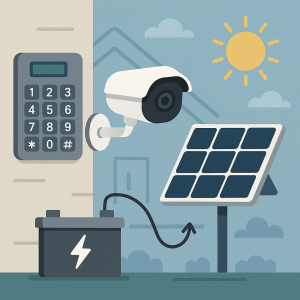
At their core, solar-powered motion sensors are devices that detect movement in a designated area and operate on solar energy. These sensors typically consist of three main components:

  1. Motion Detection Unit – Uses technologies such as Passive Infrared (PIR), microwave, or ultrasonic to detect movement.
  2. Solar Panel – Captures sunlight and converts it into electrical energy, storing it in an onboard battery.
  3. Battery Storage – Powers the device during low-light conditions or nighttime.

When motion is detected, the sensor can trigger various responses, such as turning on a light, sounding an alarm, or sending a notification to a connected device. Their ability to function autonomously with minimal wiring makes them an attractive option for remote or off-grid installations.

Environmental Benefits of Solar-Powered Motion Sensors

The transition toward solar-powered devices is part of a broader shift to combat climate change and reduce dependence on fossil fuels. These sensors offer several environmental advantages:

1. Reduced Carbon Footprint

By utilizing solar energy, these devices significantly cut down on greenhouse gas emissions associated with traditional electricity sources. Over time, this reduction can have a measurable impact on the carbon footprint of a household or business.

2. Energy Independence

Solar-powered systems rely less on public power grids, decreasing the demand for non-renewable energy sources. This is especially beneficial in regions prone to power outages or where grid connectivity is limited.

3. Minimal Infrastructure Requirements

Because they do not require extensive electrical wiring, solar-powered motion sensors minimize the environmental disturbance during installation. They can be easily mounted on walls, poles, or fences without digging or trenching for cables.

Enhancing Security with Sustainability

Solar-powered motion sensors have evolved from being niche products to essential elements of smart and sustainable security systems. Their application in property protection spans residential, commercial, and public sectors.

1. Residential Use

Homeowners use these sensors to secure entry points such as doors, windows, driveways, and backyards. Integration with smart home security systems allows for real-time alerts, remote access, and even live video monitoring when combined with solar-powered cameras.

2. Commercial and Industrial Use

Warehouses, construction sites, and office complexes benefit from solar-powered motion sensors to monitor perimeters and control unauthorized access. Their independence from grid power makes them ideal for temporary installations.

3. Public and Community Spaces

Municipalities use solar-powered security systems in parks, parking lots, and remote roads. They help deter vandalism and enhance public safety, especially in areas lacking permanent infrastructure.

Advantages of Solar-Powered Motion Sensors

The popularity of solar-powered motion sensors can be attributed to a wide array of benefits that extend beyond sustainability.

1. Cost-Effectiveness

While the initial cost may be higher than conventional sensors, long-term savings on electricity bills and maintenance can make them more economical. Solar energy is free, and modern solar panels are highly efficient, reducing dependency on external power sources.

2. Low Maintenance

These systems typically require minimal upkeep. Most are built to withstand harsh weather conditions, and the solar panels are designed to remain functional with occasional cleaning.

3. Wireless Convenience

Being wireless, solar-powered motion sensors offer flexibility in placement and reduce clutter. They are easy to install and ideal for locations where wiring is impractical or too costly.

4. Scalability

As your security needs grow, more sensors can be added without overhauling the existing electrical infrastructure. This modular nature makes them a scalable solution for expanding properties.

5. Smart Integration

Many solar-powered motion sensors can be integrated into smart home security ecosystems. They can communicate with other smart devices such as lights, locks, cameras, and home assistants, allowing users to create comprehensive security protocols.

Challenges and Limitations

While solar-powered motion sensors offer numerous advantages, they are not without limitations.

1. Dependence on Sunlight

Their performance is highly dependent on sunlight exposure. In regions with extended cloudy seasons or minimal daylight during winter, the energy harvested might not be sufficient to keep the sensors operational around the clock.

2. Battery Life and Capacity

Although battery technology has improved, most solar-powered devices are still limited by battery capacity. Over time, battery performance may degrade, requiring periodic replacement.

3. False Alarms

Like all motion detectors, solar-powered variants are susceptible to false alarms triggered by animals, wind-blown debris, or fluctuating temperatures. Advanced models with AI filtering or dual-sensor systems help reduce such occurrences but come at a higher cost.

4. Higher Upfront Costs

Premium solar-powered motion sensors with advanced features (such as Wi-Fi connectivity, night vision, or AI detection) tend to be more expensive upfront compared to their wired counterparts.

Innovations and Trends in Solar-Powered Motion Sensors

As technology advances, solar-powered motion sensors continue to evolve, becoming smarter, more efficient, and more integrated.

1. AI-Enhanced Motion Detection

Machine learning algorithms are being used to differentiate between types of movement—humans, animals, vehicles—thus reducing false alarms and improving reliability.

2. Integration with IoT

Internet of Things (IoT) connectivity allows these sensors to communicate with other smart home or building automation systems. This creates opportunities for layered security strategies that are both efficient and adaptable.

3. Improved Energy Efficiency

Advances in photovoltaic cells and power management software mean newer models can harvest and use solar energy more efficiently. Some models even include hybrid charging options, where grid power can supplement solar when needed.

4. Mobile and Remote Monitoring

Through smartphone apps and cloud services, users can monitor their property in real-time, regardless of location. Alerts, video feeds, and historical data can be accessed on the go, adding a layer of convenience and control.

Case Studies and Real-World Applications

1. Rural Properties and Farms

Solar-powered motion sensors have proven invaluable in remote rural settings where power lines don’t reach. Farmers use them to protect crops, monitor livestock movement, and deter theft or trespassers, especially at night.

2. Off-Grid Cabins and Tiny Homes

For those living off the grid, self-sufficiency is key. Solar-powered security systems allow them to maintain high levels of safety without relying on municipal power sources.

3. Eco-Friendly Commercial Buildings

Green-certified office buildings increasingly incorporate solar-powered motion sensors as part of broader sustainability initiatives. In addition to reducing electricity use, they enhance the building’s LEED or BREEAM rating.

How to Choose the Right Solar-Powered Motion Sensor

Before purchasing, consider the following factors to select the sensor that best fits your needs:

  • Location and Sunlight Exposure: Ensure the area receives enough sunlight for consistent charging.
  • Detection Range and Angle: Match the sensor’s range with the size and layout of the area to be monitored.
  • Weather Resistance: Opt for weatherproof models (IP65 or higher) if placing outdoors.
  • Battery Capacity: Look for sensors with large or replaceable batteries for longer operation.
  • Smart Features: Decide if you need features like remote access, app notifications, or integration with existing smart home security systems.

Future of Solar-Powered Security Solutions

The future of solar-powered motion sensors looks promising. As the world moves toward smart cities and homes, these sensors are expected to play a central role. Some trends to watch include:

  • Autonomous Drones for Surveillance: Solar-powered sensors could trigger drones for real-time aerial monitoring.
  • Blockchain-Enabled Security Logs: Enhanced data security through decentralized storage of sensor activity.
  • Self-Healing Networks: Sensor systems that adapt and reconfigure themselves in case of device failure or changes in the environment.

By merging clean energy with advanced security features, solar-powered motion sensors are setting a new standard in property protection.

Conclusion

Solar-powered motion sensors exemplify the convergence of sustainability and security. Their ability to harness the sun’s energy to protect properties, without relying on traditional power sources, marks a significant advancement in smart home security and eco-friendly technology. As the global push for green energy continues, adopting such innovations not only ensures personal safety but also contributes to a broader mission of environmental stewardship.

Whether you’re safeguarding a suburban home, a remote farm, or a city park, solar-powered motion sensors offer a reliable, scalable, and sustainable security solution that meets the demands of the present and the challenges of the future.

Here Comes The Sun

Here Comes the Sun: Why Solar Energy Is More Fun Than You Think

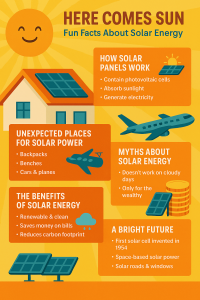
Let’s face it: the sun is kind of a big deal. It’s been lighting up our world for billions of years, it keeps our planet from turning into a giant ice cube, and it’s the reason beach days, sunflowers, and solar panels exist. But while we often think of the sun as just the backdrop to a sunny vacation selfie or the power behind getting a washing line of laundry dried nicely and for free, it’s also the powerhouse behind one of the most exciting (and surprisingly fun) sources of energy today: solar power.

What Is Solar Energy Anyway?

Solar energy is basically power from the sun. It travels 93 million miles to reach us in about eight minutes, and in just one hour, the sunlight that hits Earth could power the entire planet for a year. Yes, a year.

The trick is capturing that energy and putting it to work. That’s where solar panels come in. These clever gadgets use something called photovoltaic (PV) cells—usually made from silicon—to absorb sunlight and turn it into electricity. It’s like magic, except it’s science.

Solar Power Is Like Owning a Mini Power Plant on Your Roof

Installing solar panels on your house isn’t just eco-friendly, it’s a little bit empowering (pun fully intended). You’re essentially turning your roof into a personal power plant. Instead of buying all your electricity from the grid, you start making your own. And if you generate more than you use? In many places, you can sell it back to the grid. That’s right—your house can make money while you sip lemonade in the shade.

Even better, modern solar panels are low-maintenance and long-lasting. Most come with warranties of 20–25 years and just need the occasional cleaning (preferably not by climbing on the roof in flip-flops).

But It’s Not Just for Roofs Anymore

Solar power is popping up in some seriously unexpected places. There are solar-powered backpacks that charge your phone while you hike. Solar benches in parks that let you plug in and chill. Even solar-powered cars and planes are cruising into the future. And there is also a solar train.

One of the coolest inventions? Solar farms—huge stretches of land covered in panels, often in deserts where sunlight is intense and land is cheap. Some of these solar farms use a different kind of tech called concentrated solar power (CSP) that uses mirrors to focus sunlight onto a tower to make steam and drive turbines. It’s like a steampunk dream come true.

And if you’ve ever seen a solar tree (yes, that’s a thing), they’re designed to look like futuristic sculptures while generating power and providing shade. Art and science holding hands.

Solar Energy Is Going Galactic

Speaking of science fiction, did you know scientists are looking into space-based solar power? The idea is to launch solar panels into orbit where the sun always shines, and beam the energy back to Earth using microwaves. It sounds wild, but prototypes are already in development. If they work, Earth could get clean energy 24/7—no clouds, no nighttime, no problem.

A Solar-Powered Slice of History

Believe it or not, solar power isn’t new. In fact, humans have been using the sun’s energy for thousands of years. Ancient Greeks designed buildings to trap sunlight in winter and block it in summer—early solar architects! They had a room called the atrium, where family often gathered to enjoy the light and air circulation. And in the 1800s, people started building solar ovens to cook without firewood.

The first modern solar cell was created in 1954 at Bell Labs. It was only about 6% efficient—today’s best panels can hit over 22%—but it was enough to power a small toy. That’s how it all started: powering a toy. Today? We’re powering cities.

Solar Myths: Busted!

Let’s shine a light (pun intended again) on a few myths:

Myth 1: Solar panels don’t work on cloudy days.
Not true! While they’re most efficient in direct sunlight, panels still generate electricity when it’s overcast. Germany, one of the cloudiest countries in Europe, is a solar leader.

Myth 2: Solar power is only for rich people.
Also not true! Prices have dropped over 80% in the last decade, and many governments offer rebates, tax incentives, and even free installation programs.

Myth 3: You need a house to use solar.
Nope. Apartment dwellers can subscribe to community solar projects or use portable solar chargers for devices. Solar is more flexible than ever.

Solar Saves the Planet (and Your Wallet)

Now let’s get a little serious for a second. Traditional electricity often comes from burning fossil fuels, which can produce smoke and dust.

Solar energy is clean, renewable, and emits zero pollution while it works. Every solar panel installed helps reduce our reliance on polluting fuels and protects our atmosphere. Plus, over time, solar power saves you money. After the initial setup, sunlight is free—forever.

Solar Energy Jobs: The Sunshine Economy

The solar industry is also generating more than just electricity—it’s creating jobs. From engineers and electricians to salespeople and sustainability consultants, there are opportunities in design, installation, research, maintenance, and manufacturing. It’s one of the fastest-growing industries worldwide.

And for those looking to make a career switch into something meaningful? Working in solar energy is like being part of a superhero team—only instead of capes, you wear hard hats and harnesses.

What’s Next? Solar Paint and Solar Roads

The future is getting brighter, literally. Researchers are working on solar paint, which could turn walls into energy-harvesting surfaces. There’s also solar glass, so windows can generate electricity without blocking the view.

And in some places, like France and China, they’ve started experimenting with solar roads—actual streets that absorb sunlight and produce electricity. It’s early days, but if successful, our cities might one day power themselves just by existing.

So, Why Is Solar Energy Fun?

Because it’s full of possibilities. It’s about innovation, independence, creativity, and helping the planet without sacrificing modern convenience. It empowers individuals, inspires inventors, and turns everyday spaces into sources of clean energy.

Whether you’re an eco-warrior, a tech lover, a budget-saver, or just someone who enjoys a good sunrise, solar energy has something to offer. It’s science with sunshine, progress with personality.

So next time you’re outside soaking up some rays, give a little nod to that big fiery ball in the sky. It’s not just lighting your path—it might just be lighting your future.

Solar Energy and Power © 2018 Frontier Theme